STEAM Innovation, beyond the project: Connecting schools, local communities and territories
Materahub brings the European debate on the future of STEAM education to Matera: two international days, as part of a Creative Europe-funded project, bringing together students, teachers, experts and institutions from across Europe
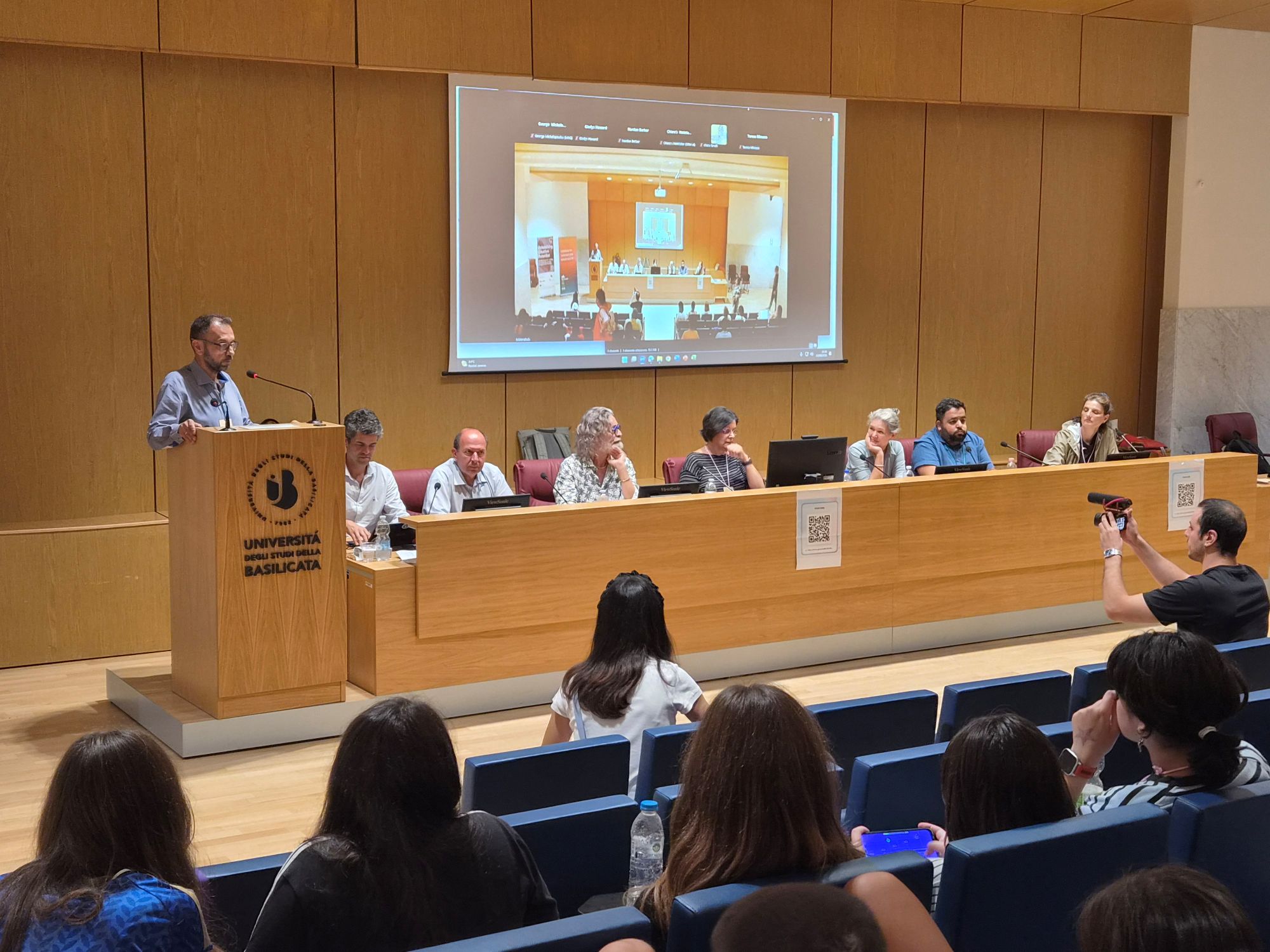
On 11 and 12 September, Materahub brought together students, teachers, experts and representatives of European institutions in Matera for the Final Conference and International Student Festival of STEAM Innovation. Around 200 participants, more than 150 of whom attended in person, travelled to the city for the conclusion of the European project, in which Materahub is a partner. Over the past two years, the project has involved 43 schools, around 200 teachers and more than 1,500 students in Italy, Greece, Cyprus and Portugal. Alongside delegations from the four partner countries, the event also welcomed participants from Turkey, Albania, Romania, Belgium, Germany and other European countries.
What does it mean to do STEAM?
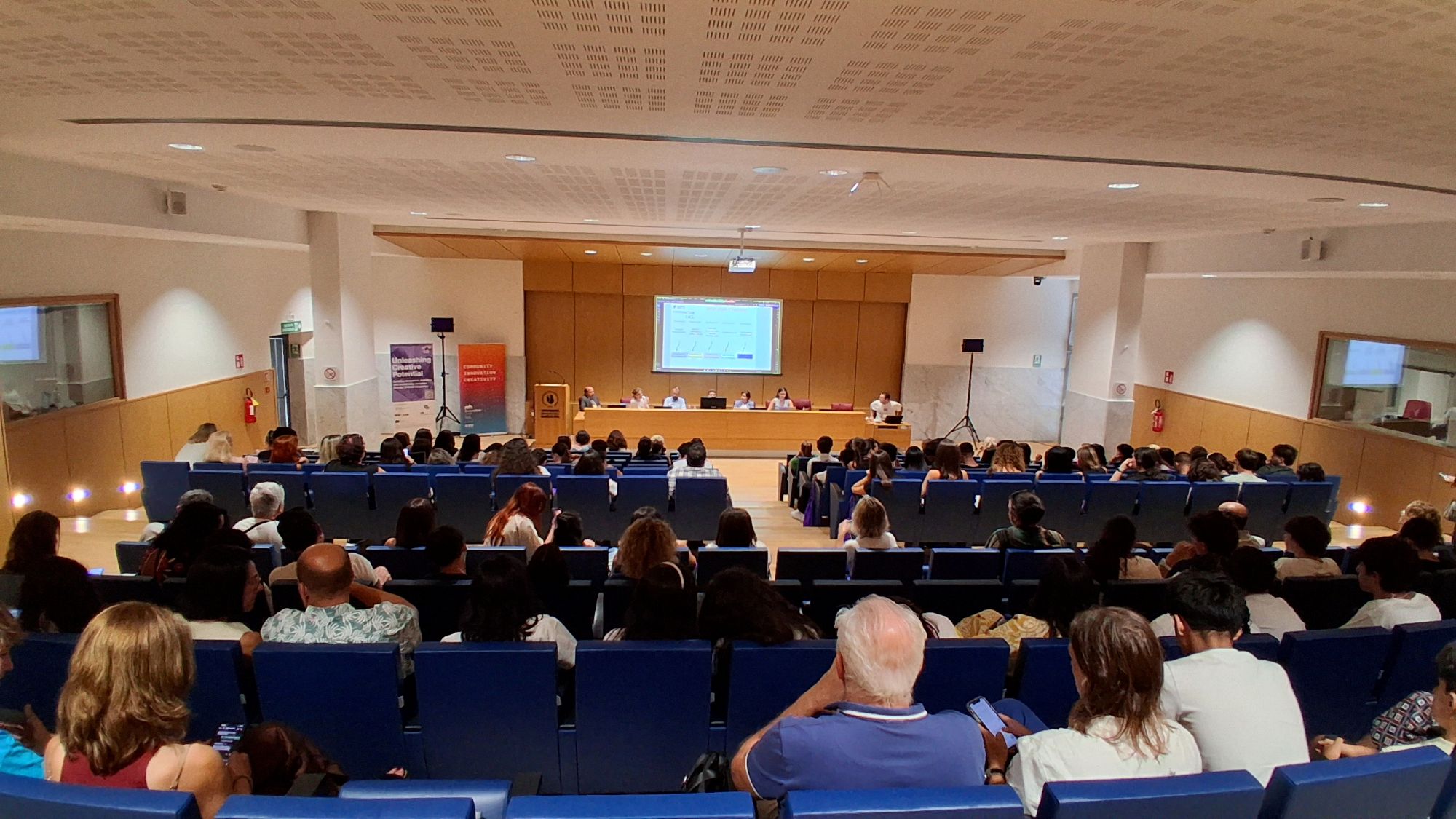
One of the recurring themes of the conference was the very meaning of the STEAM approach. According to Sofoklis Sotiriou, science and art need to come together “on equal terms”. This means neither adding an artistic component at the end of a scientific project nor using technology simply as an additional tool. Rather, the aim is to create experiences in which different disciplines and forms of expression contribute together to understanding a problem.
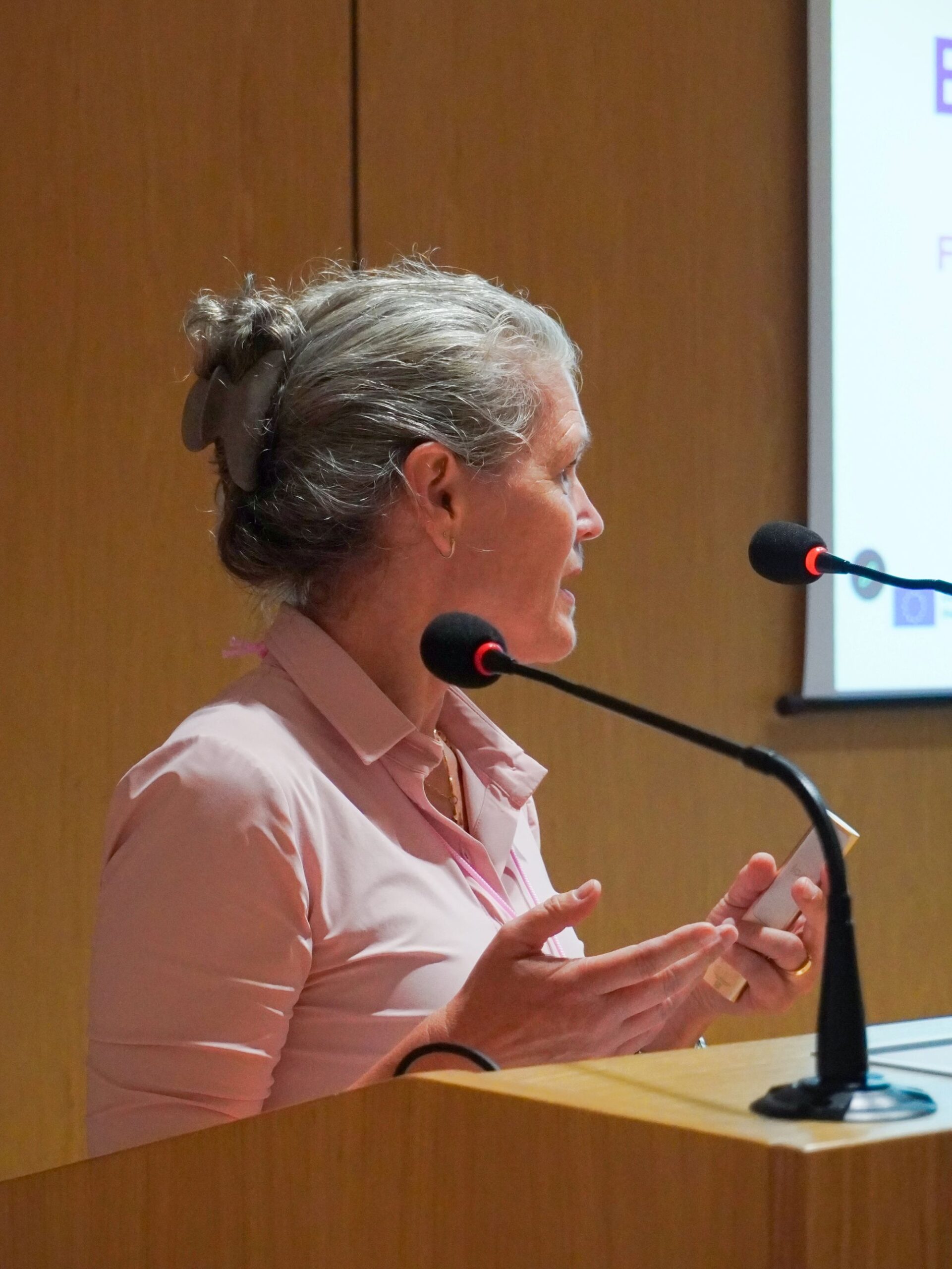
This is why skills such as collaboration, creativity, communication and creative problem-solving are so important, alongside an approach to open schooling that can build stronger connections between schools, students, teachers and communities. This perspective was also reflected in the keynote by Jessica Niewint-Gori of INDIRE, Building Future Skills through Systemic STEAM Education. As she explained, STEAM education increasingly needs to engage with real-world problems and develop skills in problem-solving in context, collaboration, communication, creativity and critical thinking.
Even mistakes can take on a different meaning. In the learning process, Niewint-Gori emphasised, a mistake can become “the starting point to create something new, something better, something different”. A mistake, therefore, is not necessarily a setback: it can become the starting point for making changes, improving and finding new solutions. This is the same principle behind making & tinkering, where trying, building, making mistakes, modifying and trying again all become part of the learning process.
Students at the heart of the experimentation
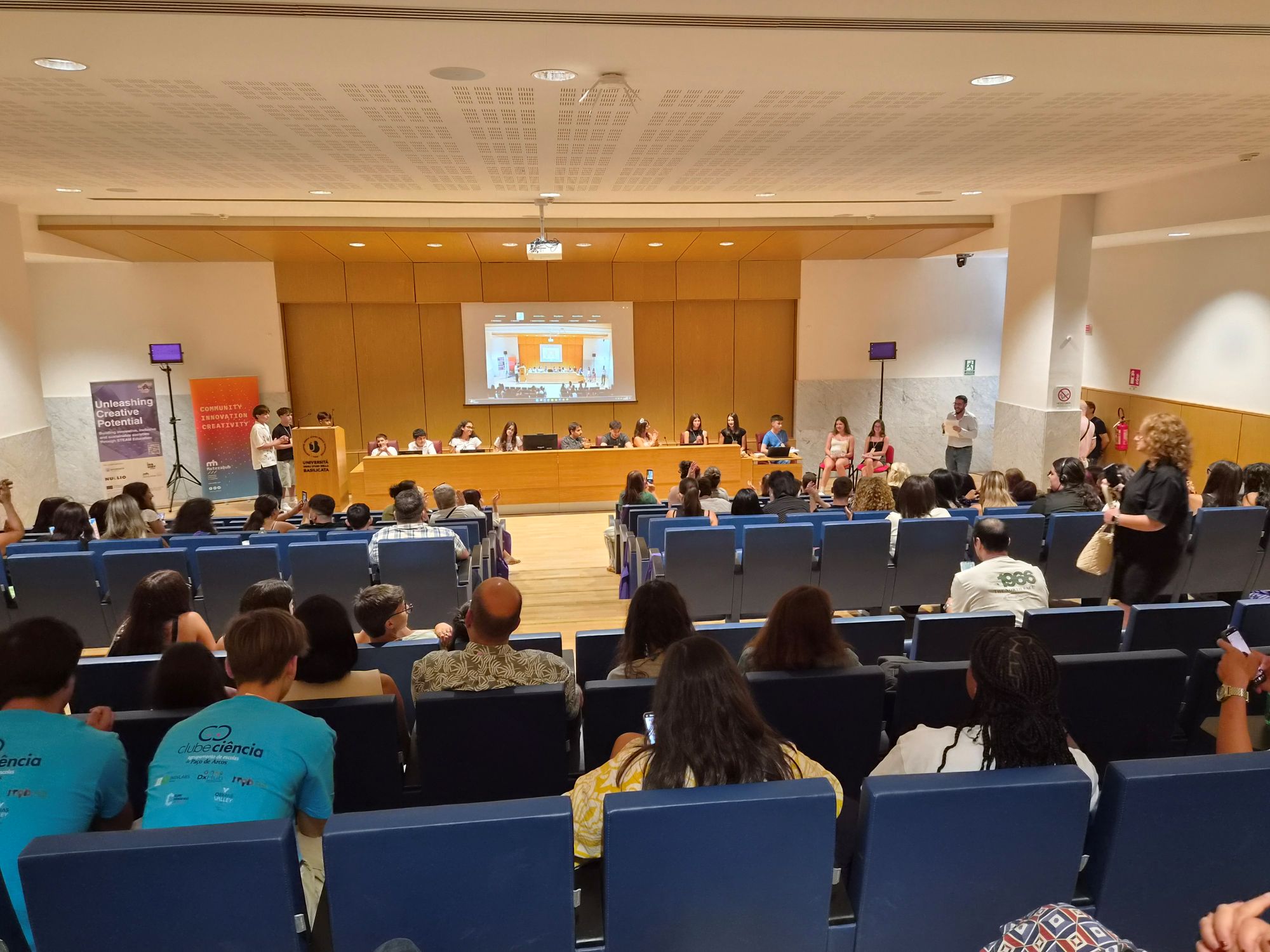
During the first day, students took centre stage in telling the story of the project’s two-year journey. During the Students’ Showcase, young people from the four partner countries presented 12 projects developed through theatre, music, science, technology, making, programming and digital arts. Performances, prototypes, videos, experiments and multimedia productions were brought to the stage, demonstrating the variety of approaches explored throughout the project: different ways of addressing problems, connecting disciplines and forms of expression, and building knowledge through experimentation.
Sofoklis Sotiriou of Ellinogermaniki Agogi summed up this transition as a “shift from students as consumers to creators”: students are no longer simply recipients of knowledge, but active participants in constructing it.
Greece presented the Learning Science Through Theatre initiative, which involved more than 600 students and 100 teachers, using theatre to bring young people closer to scientific concepts and explore new ways of learning. In Cyprus, data and scientific phenomena were transformed into sound through nine performances created by 36 students and 7 teachers as part of a data sonification programme.
In Italy, the Festival showcased the work of students from the Carlo Levi Art High School in Matera, who explored the connections between art, science, music and digital technologies through audiovisual productions focusing on highly topical issues, ranging from gender equality and the environment to social and economic inequalities. The methodology was also transferred to two other schools, ultimately reaching more than 250 students and 25 teachers.
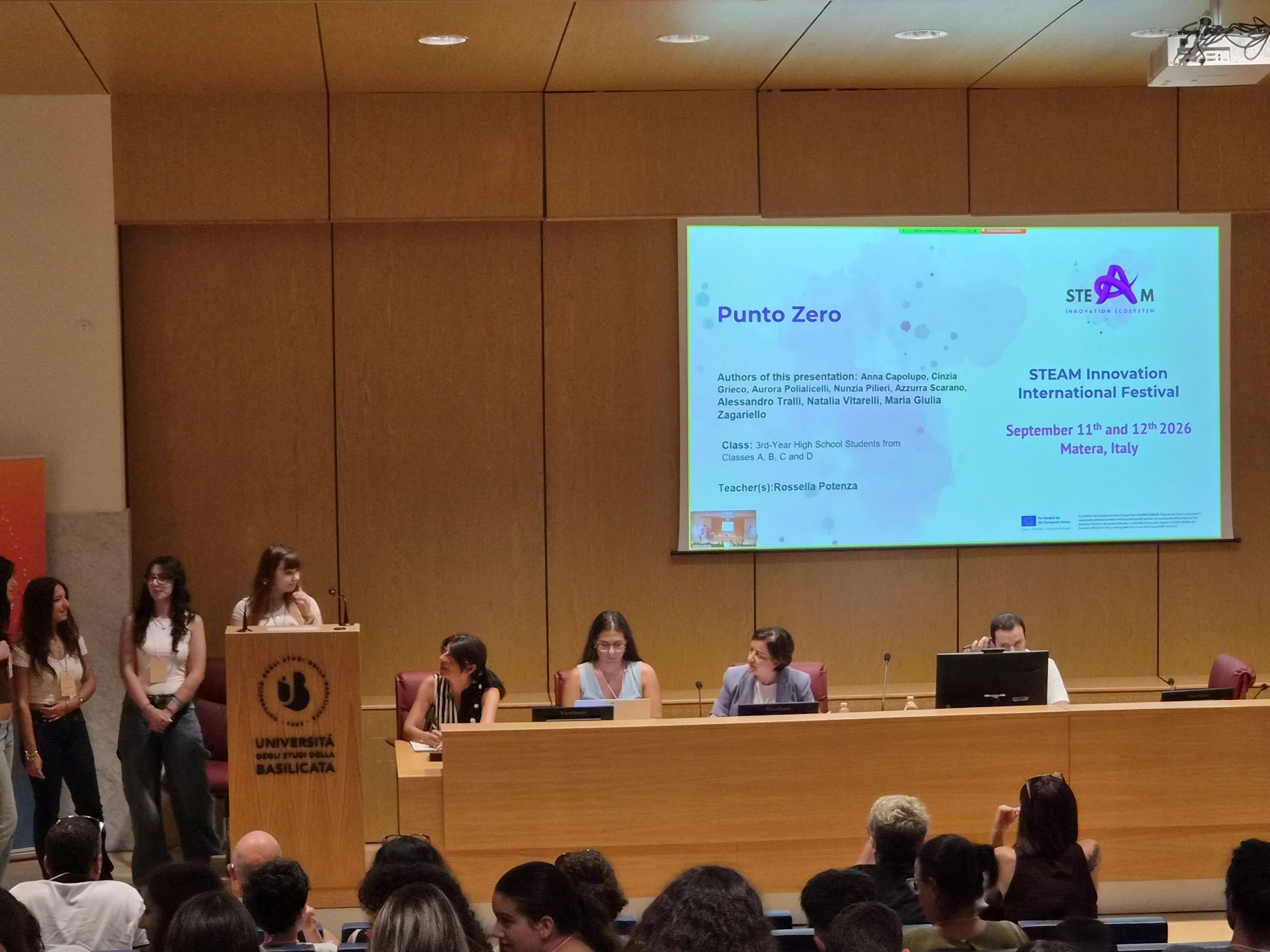
In Cyprus, data and scientific phenomena were transformed into sound through nine performances, created by 36 students and 7 teachers as part of a data sonification programme, turning scientific information and content into musical and performative experiences.
In Portugal, the Maker Movement brought a learning-by-doing approach into schools, involving 56 teachers and more than 580 students from 11 schools and resulting in more than 20 projects and prototypes created using microcontrollers, programming, electronics and 3D printing.
The city became a classroom Too
The Festival’s hands-on dimension moved beyond the conference venue and into the city itself. At the end of the first day, students and teachers took part in an Urban Game in Matera’s historic centre, designed and coordinated by Ivan Losacco of Giallo Sassi, with an app developed specifically for the experience by Emanuele Bruno.
Through play and exploration, participants discovered the history and distinctive features of the local area while also engaging with the issue of vulnerability to extreme weather events and the initiatives developed to mitigate their effects. The Urban Game was also an opportunity for participants to meet and collaborate outside traditional learning environments, bringing together students from different countries and backgrounds.
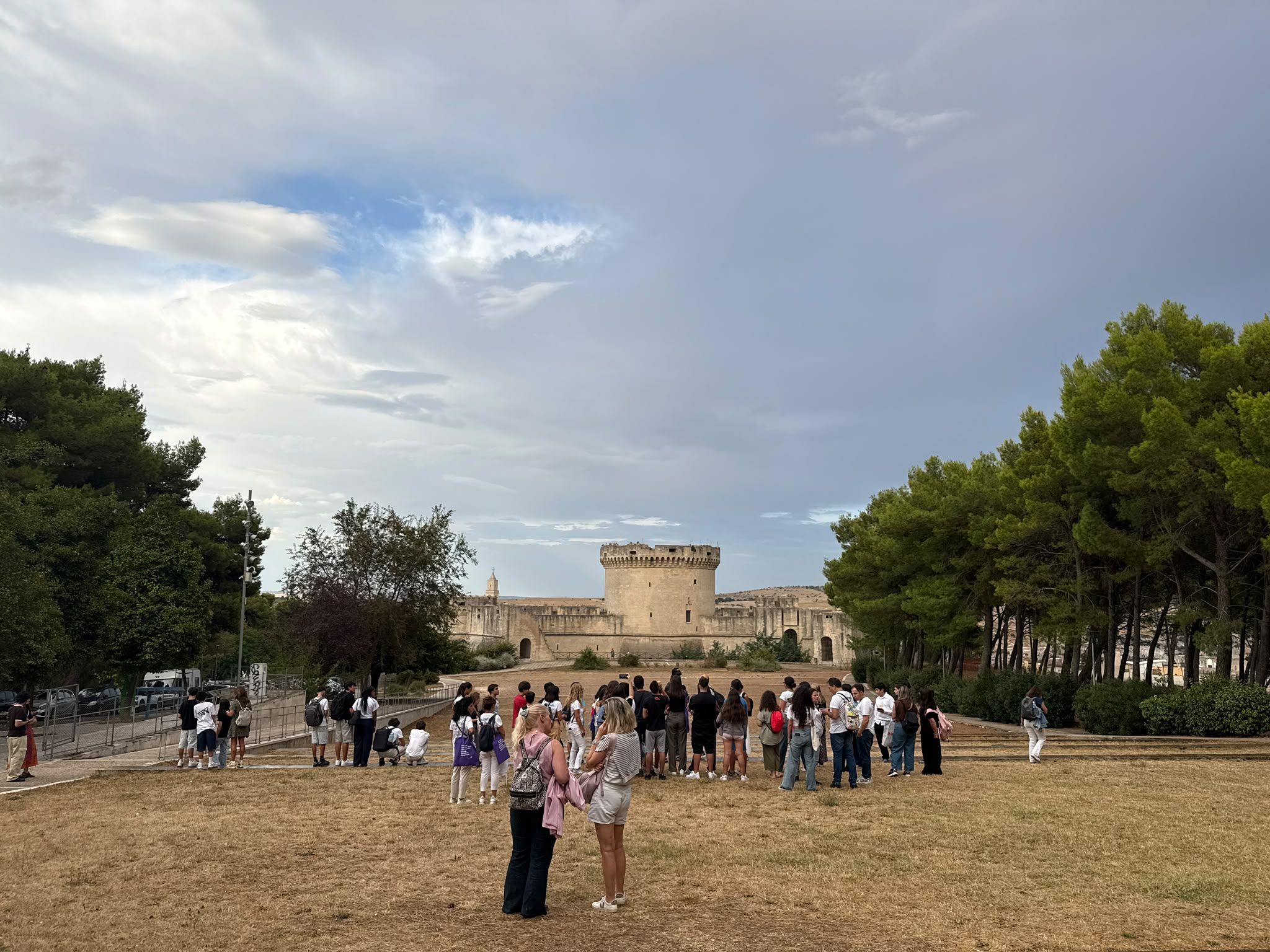
This perspective echoes the experience presented in Matera by Maria José Amândio and Liliana Cruz of the Municipality of Oeiras, encapsulated in the idea that “the whole territory is a classroom”. Opening schools up to their surrounding communities means turning places, communities and real-world problems into learning opportunities: not simply providing a different setting in which to teach, but creating a context in which students can observe, experiment, collaborate and build new knowledge.
From experimentation to long-term continuity
On the second day, the focus shifted from the results themselves to the conditions needed to ensure that the experiences developed through the project can continue and be shared more widely. The partners presented the project’s methodologies, activities and results, making videos, lesson plans, worksheets and other materials available for other schools and teachers to reuse and adapt.
However, transferring an experience means more than simply making resources available. It also means creating the conditions for teachers and schools to use them, modify them and make them their own. This highlights the importance of training, mentoring, hands-on workshops and peer-to-peer exchange, as well as a teaching role that is more open to experimentation. Teachers can learn alongside their students, guiding them through a process of research and discovery without necessarily having all the answers in advance.
This was the focus of the Expert Roundtable Discussion, moderated by Menelaos Sotiriou, which brought Jessica Niewint-Gori, Fabrizio Festa, Konstantina Liakopoulou, Sofoklis Sotiriou, Maria José Amândio, Nuno Charneca and Avgoustinos Tsaousis into dialogue across the fields of research, education, culture, local government and European policy.
The discussion highlighted the need to build relationships that extend beyond the lifespan of individual projects, creating networks between schools, universities, research centres, cultural and creative organisations, businesses and local authorities. This is where the idea of STEAM ecosystems comes into play: environments in which educational innovation does not depend on a single experimental initiative, but can continue through collaboration, shared expertise and new opportunities.
The European level can also help create these conditions. The participation of Emanuela Giorgi, Project Advisor at EACEA, placed STEAM Innovation within a broader framework, drawing attention to initiatives such as SciArt at the Joint Research Centre, the work of DG EAC towards the creation of a STEAM Expert Group, and the role of platforms such as EU Academy in sharing resources and training opportunities.
The legacy lies in the connections
More than the individual results themselves, this relational dimension emerged as one of the most significant aspects of the two days in Matera. Students, teachers, artists, researchers, universities, cultural and creative organisations, local authorities and European institutions came together: worlds that often work separately and that STEAM Innovation sought to connect.
For Annamaria Guarino, Project Manager at Materahub, it is precisely this coming together that gives meaning to the conclusion of the project:
“Seeing students, teachers, partners, experts and representatives of European institutions gathered together in Matera, all part of a journey we have built together over the years, and seeing dialogue, exchange and new connections emerge among them, was the most rewarding and meaningful way to bring STEAM Innovation Ecosystem to a close: not simply by celebrating what we have achieved, but by creating the conditions for what we have built to continue beyond the project.”
In this sense, the legacy of STEAM Innovation lies not only in the results it has produced, but also in the possibility of sharing, adapting and transforming what has been tested into new educational experiences. Methodologies, skills and relationships can become the starting point for new collaborations between schools, local communities and organisations, extending beyond the formal conclusion of the project.
The project may be coming to an end, but the connections it has created can continue to generate new opportunities for learning and experimentation. Because, as Guarino emphasises, “innovating education means, first and foremost, creating connections: between science and art, between schools and their local communities, between teachers and students, and between different countries and cultures.”